
Daily Supplement Routines
Building a Daily Vitamin D and Magnesium Routine
Marcus Webb
·
·
9 min read
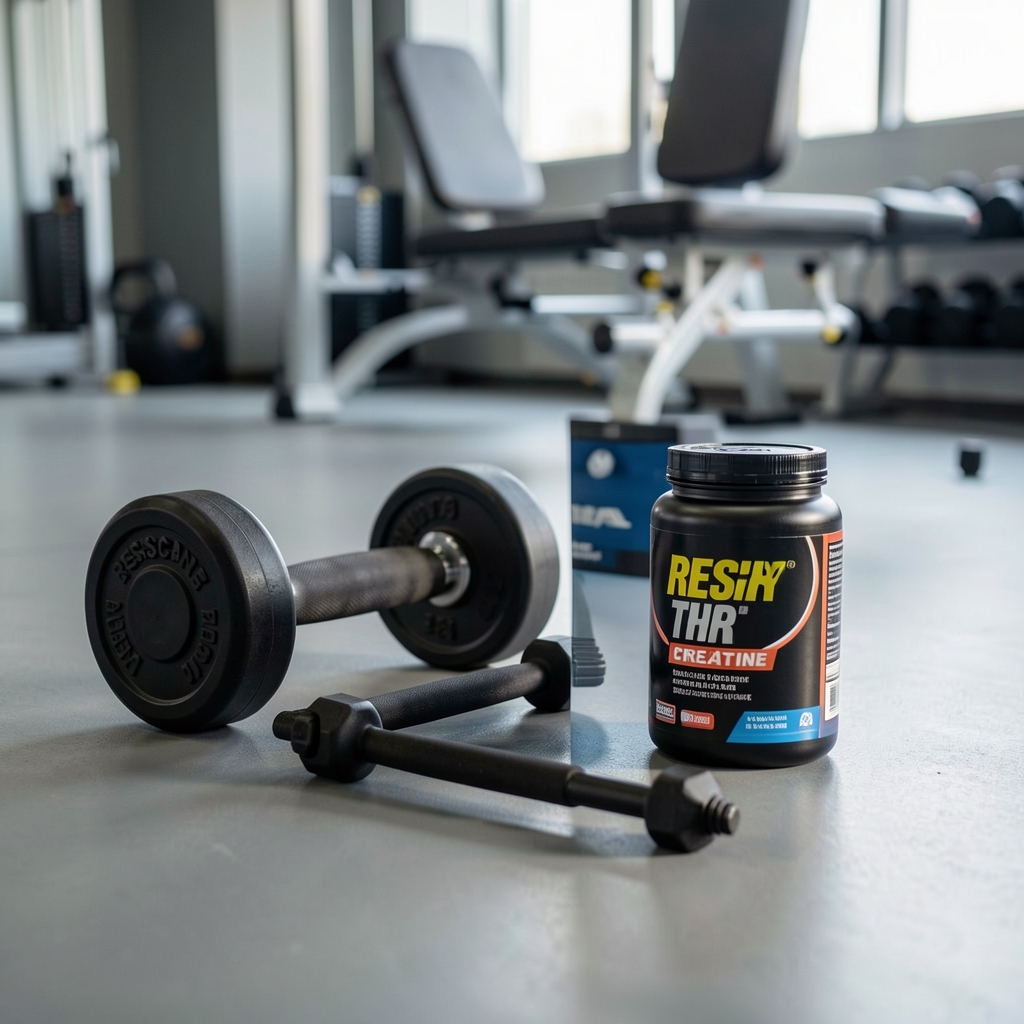
Creatine occupies a distinctive position in the supplement stacking records of active men. Among the nutrients observed across Jakarta-based and broader Indonesian supplement journals, few appear with the same consistency across different training styles, age groups, and experience levels as creatine monohydrate. Its presence in men's daily supplement stacks is not simply a matter of trend — it reflects a pattern grounded in one of the more thoroughly documented bodies of published nutritional research in the active lifestyle space.
This article examines how creatine features in the supplement habits of men engaged in regular resistance training. The approach here is reportorial rather than prescriptive: the Dispatch documents what is observed, contextualised against what published nutritional research has recorded. Individual nutritional choices remain the domain of the reader, ideally informed by the perspective of a qualified wellness professional.
In the supplement stacking records examined for this article, creatine appears most frequently among men who have been training consistently for more than six months. Its introduction into an established stack is rarely the first supplement decision — it tends to follow a period during which foundational nutrients such as protein, vitamin D, and magnesium have already been integrated into the daily routine.
The pattern is consistent: creatine is an addition rather than an origin. Men who include it in their stacks characteristically describe its adoption as a considered decision — one made after reading about the published research rather than on the basis of peer recommendation or marketing. This distinguishes creatine from many other supplements documented in men's nutritional habits, where word-of-mouth or product visibility is a more common adoption driver.
The form most frequently recorded is monohydrate — both for its research backing and its relative cost accessibility compared to newer creatine variants. The records here suggest that men who have researched creatine thoroughly tend to converge on monohydrate as the practical choice, regardless of the wider product landscape available.
Published nutritional research on creatine and physical output represents one of the most extensive bodies of evidence in the active lifestyle supplement space. The research consistently documents creatine's contribution to physical output over time in resistance training routines — specifically, its role in supporting the body's capacity to perform repeated high-effort movements with shorter recovery intervals between sets.
The editorial observation here is that the research is notable not just for its volume but for its consistency across different study populations and training protocols. Few nutrients in the active lifestyle supplement space have been examined as thoroughly or as consistently in relation to a specific physical performance domain. This consistency is part of what drives the observed adoption pattern among men who have engaged seriously with the published evidence.
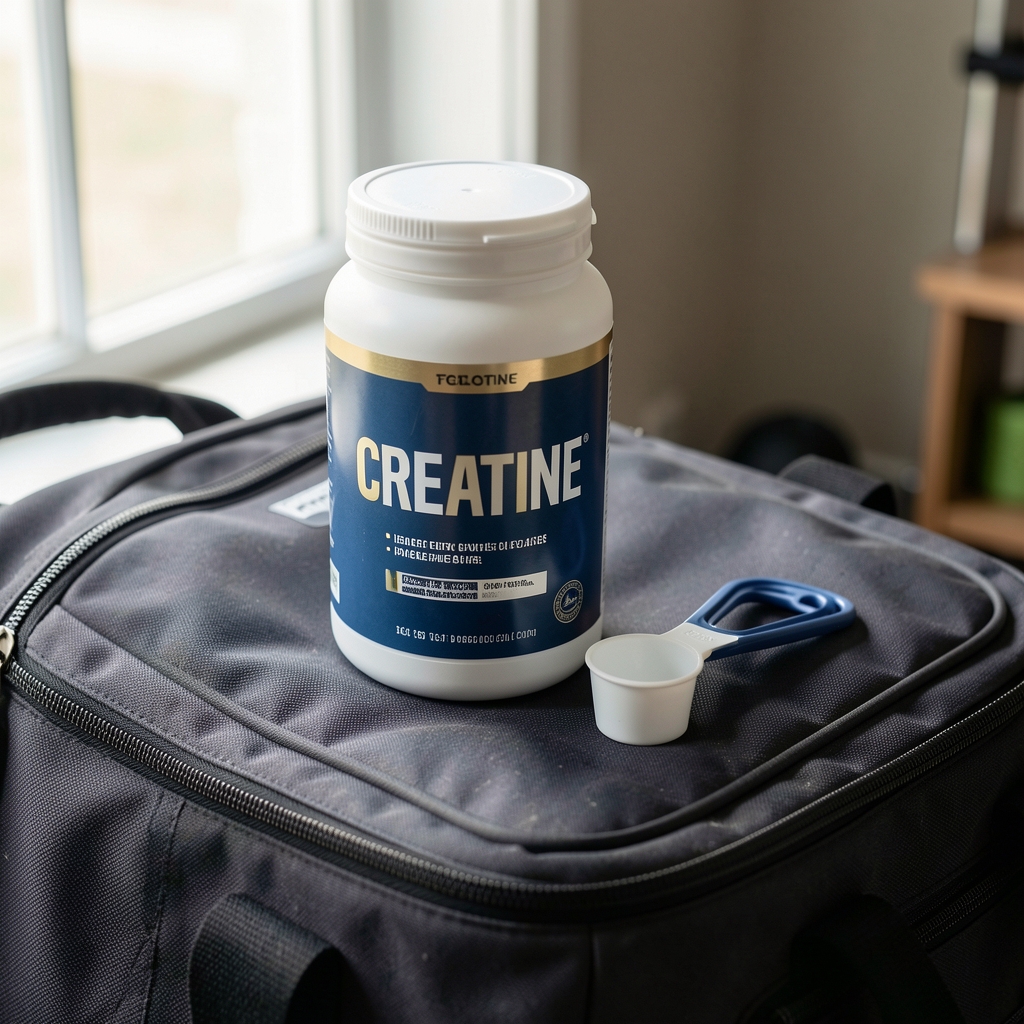
Fig. 1 — Creatine monohydrate alongside resistance training equipment, observed in a Jakarta-based gym routine.
Among the supplement stacking combinations documented in this editorial series, the pairing of creatine with protein — typically in the form of a whey concentrate or isolate — appears with notable frequency. The pairing reflects a logical nutritional structure: protein supports daily protein intake targets alongside whole foods, while creatine supports physical output over time in resistance training routines. Together, they address adjacent aspects of the active man's nutritional awareness.
The timing of these two supplements within the daily routine varies across the records examined. Some men document both in a post-training window, while others distribute them across different points in the day. The Dispatch's observation is that both approaches appear in approximately equal measure in the records, suggesting that timing preferences are driven by practical routine logistics rather than a single dominant protocol.
Protein intake from whole food sources remains the preferred primary channel in the majority of stacking records examined here. Supplement-form protein is documented as an addition to whole food intake — a practical tool for reaching daily protein awareness targets on training days when whole food sources are insufficient, rather than a replacement for dietary protein. This distinction is editorially significant: the supplement stacking records of the most consistent practitioners consistently reflect a whole-food-first orientation.
A secondary observation emerging from the creatine-focused records in this article concerns the appearance of B-vitamin complexes in the same stacks. B vitamins contribute to daily focus and energy awareness — and in the observed records, their inclusion in training-day supplement routines is common. The pattern suggests that men building performance-oriented supplement stacks are not solely focused on physical output metrics but are equally attentive to the quality of energy and focus available before and during training sessions.
The co-occurrence of creatine and B vitamins in the same stack is not a documented nutritional interaction in the same way as the vitamin D and magnesium pairing. It reflects, instead, a pragmatic approach to the multiple dimensions of performance nutrition: output, energy awareness, and focus are regarded as complementary rather than competing nutritional priorities. The editorial record suggests this is a coherent and increasingly common stacking logic among active men in Indonesia's urban training community.
What the records consistently demonstrate is that the men most engaged with published research are also the most measured in their expectations of any single supplement — a sceptical regard for claims is, paradoxically, what keeps the most evidence-informed stacks grounded.
Among the creatine-using men documented in this editorial review, two distinct intake protocols appear: a loading approach — characterised by higher daily intake across an initial period followed by a lower maintenance intake — and a consistent lower-dose approach maintained from the outset without a loading phase. The records here do not indicate a clear dominant preference. The loading protocol appears more commonly in men with prior exposure to gym culture and supplement marketing, while the no-loading approach is more common among men who arrived at creatine through independent research engagement.
Published nutritional research has examined both approaches. The editorial observation from the Dispatch's review of that literature is that both reach comparable outcomes over longer observation windows, making the practical choice between them largely a matter of routine preference and tolerance of the initial loading period's daily intake requirements. Neither approach is editorially endorsed here — both are documented as observed patterns.
The supplement stacking records that involve creatine consistently show one further observation worth documenting: the men who report the most coherent relationship with creatine as a daily supplement are those who have taken the long view of its integration. Creatine's contribution to physical output over time in resistance training routines is not an acute effect recorded over days — it is a cumulative pattern observed across weeks and months of consistent use.
This temporal dimension distinguishes creatine from supplements associated with more immediate awareness — pre-workout formulations, for example, or caffeine-adjacent energy products. The patience required for creatine's documented benefits to become observable in a personal training record is itself a filtering mechanism: the men who persist with it through the initial weeks when no obvious change is apparent are, by definition, those who are most oriented toward the long-form nutritional record rather than the immediate result. That orientation is, in the editorial view of Oteka Dispatch, one of the defining characteristics of the most considered supplement stacking habits documented in this series.
Articles published on Oteka Dispatch are editorial in nature and reflect the writers' observations on everyday supplementation habits and nutritional awareness for active men. The content is not intended as professional advice, nor as guidance for the management of any specific condition. Readers with specific concerns about their daily routines are encouraged to speak with a qualified wellness professional.

Founding editor of Oteka Dispatch. Marcus writes on men's nutritional awareness, supplement stacking, and the practical rhythms of active lifestyle nutrition across Indonesia and Southeast Asia.
More from this author →